
Navigating the world of POS systems in the UK can be daunting for restaurant business owners. This guide to point of sale aims to simplify the process, providing a clear understanding of how a point of sale system, also known as an EPOS, can streamline operations, enhance customer service, and ultimately boost profitability. From small businesses can benefit greatly from a cloud-based system that streamlines transactions. to multi-location restaurants, finding the right POS is crucial. We’ll explore the various types of POS systems, hardware, software options, and key considerations to help you choose the right POS system for your business needs.
Understanding POS Systems
What is a point of sale system for restaurants?
A point of sale system for restaurants, or POS system, is a comprehensive solution that streamlines transactions and management tasks. It’s more than just a till; it’s a sophisticated system that handles order entry, especially in a cloud-based system, is crucial for accurate sales tracking. payment processing (including card and contactless payments), inventory tracking, and reporting. This system enables restaurants to efficiently manage sales, track stock, and gain valuable insights into their business performance. The POS often integrates with other systems, such as accounting software and online ordering platforms, creating a cohesive operational ecosystem.
How to operate POS for beginners step by step?
Operating a POS system as a beginner involves a few key steps. You’ll generally need to:
- Familiarise yourself with the user interface, typically found on a tablet or touchscreen monitor.
- Enter customer orders accurately, ensuring all items and modifications are correctly recorded.
- Process payments using various methods, such as card, cash, or mobile payment options.
- Track inventory by marking items as saled, allowing the system to automatically adjust stock levels.
- Generate a deal that includes training for a cloud-based system. sales reports to monitor performance and identify trends.
Most POS systems offer training resources and support to guide new users.
Types of POS Systems for Restaurants
The types of POS systems available for restaurants in the UK are diverse, catering to different business needs. Here are some examples of the variety available:
- Cloud-based POS systems, which offer flexibility and accessibility, allowing management from anywhere with an internet connection.
- Mobile POS systems, often utilizing iPads or other tablets, are ideal for restaurants needing portability, like food trucks or busy takeaway counters.
On the other hand, offline POS systems store data locally, ensuring functionality even without internet access. Choosing the right POS system depends on factors like restaurant size, service style (fast food chains often incorporate kebab options in their menu for variety. vs. fine dining), and specific business requirements.
Choosing the Right POS System for Your Business
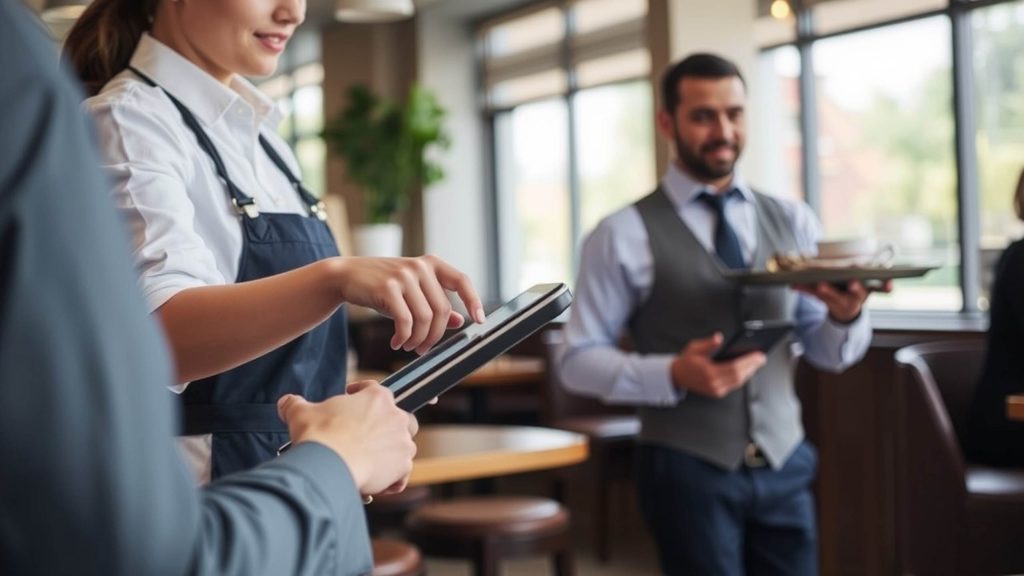
Factors to Consider When Choosing a POS System
Choosing the right POS system for your business involves carefully evaluating several factors. It’s important to consider the elements that will directly impact your day-to-day operations. These elements can be categorized as follows:
- Hardware: This includes essential equipment like the till and card readers that support contactless payments.
- Software: Look for features such as inventory tracking and order management.
Additionally, pricing and the level of support offered by the POS provider are critical considerations.
Choosing a POS System for UK Restaurants
For UK restaurants, choosing the right POS system involves unique considerations. The system must be compliant with UK payment regulations, including card payment standards. Restaurant-specific features, such as table management, kitchen order tickets, and menu customization, are essential. If you operate a takeaway or offer online ordering, the POS system should seamlessly integrate with these channels. Also, consider whether you need a mobile POS for tableside ordering or a more stationary setup. For small businesses in the UK, finding an affordable solution with robust support is key.
Best POS Solutions for Small Businesses
The best POS solution for small businesses often balances functionality with cost-effectiveness. Cloud-based POS systems for restaurants are particularly appealing, as they offer accessibility and scalability without significant upfront hardware investments. Look for a system that simplifies order management, tracks stock levels, and provides insightful sales reports. Mobile POS options, especially those compatible with iPads or other tablets, are excellent for businesses needing flexibility. Ensure the POS system provides reliable support and training resources to help your business thrive. A right POS can make a significant difference in efficiency and deal with customer expectations. management for any small business, from a cafe to a food truck or an independent shop.
Pricing and Cost of POS Systems
Understanding POS System Pricing
Understanding POS system pricing can vary significantly depending on the features of the cloud-based system. is crucial for restaurant business owners in the UK. The cost of a POS can vary widely depending on several factors. Cloud-based POS systems often have a monthly subscription fee, while traditional systems may involve a one-time purchase of software and hardware. Some POS providers offer different tiers of service, with varying features and support levels. Consider the long-term value and how the POS will streamline operations and boost sales. Also, be aware of potential additional costs, such as payment processing fees for card transactions.
Cost Comparison: Hardware vs. Software
When evaluating the cost of a POS system, it’s essential to compare hardware and software expenses. Hardware costs include the till, card readers for contactless payments, receipt printers, and tablets for mobile ordering. Software pricing models vary, with some providers charging a monthly fee and others offering a one-time license. Cloud POS software may have lower upfront hardware costs, but recurring subscription fees. For small businesses, it’s important to analyse whether the right POS system balances upfront investment with long-term operational savings for the business.
Affordable POS Solutions for Startups
For startups and small businesses, finding affordable POS system is paramount. Look for cloud-based POS systems that offer entry-level pricing tiers with essential features like order management, payment processing, and basic inventory tracking. Mobile POS systems that utilize iPads or other tablets can also be a cost-effective option. Open source POS software can be the cheapest, but may require more technical expertise to set up and maintain. Focus on finding a system that meets your core business needs without breaking the bank, ensuring the right POS can scale with your business.
Features of Modern POS Systems
Essential Features for Restaurant Management
Modern POS systems offer a range of essential features for effective restaurant management. Table management tools allow staff to efficiently allocate and monitor table availability. Kitchen order tickets streamline communication between front-of-house and kitchen staff. Menu customization options enable easy updates and seasonal changes. Inventory tracking ensures accurate stock levels, reducing waste and optimising ordering. Reporting and analytics provide valuable insights into sales trends, popular menu items, and customer behaviour. A good POS will integrate these features for seamless management of restaurant operations. Without a right POS system, multi-location restaurants can struggle to achieve centralized management.
Payment Processing Options in POS Systems
Payment processing is a critical aspect of any POS system, offering various options to cater to customer preferences. Card payments, including chip and PIN and contactless transactions, are standard. Mobile payment options like Apple Pay and Google Pay are increasingly popular. Some POS systems also integrate with online payment gateways for online ordering. Ensure the POS system complies with the latest security standards to protect customer data and prevent fraud. Check the payment processing fees associated with different methods, as these can impact your overall costs. Streamlining the payment process enhances customer service and speeds up transactions.
Cloud-Based vs. Traditional POS Systems
When choose the right POS system, one key decision is whether to opt for a discount on the iPad POS system. cloud-based POS or a traditional offline system. Cloud-based POS systems store data in the cloud, offering accessibility from anywhere with an internet connection. They often have lower upfront costs and automatic software updates. Traditional POS systems store data locally, ensuring functionality even without internet access. However, they may require more significant upfront investments and manual software updates. Consider your business needs, internet reliability, and budget when deciding between types of POS systems. If you run a small business without a dedicated IT department, a cloud pos can provide better support.
Support and Maintenance for POS Systems
Importance of Customer Support
Reliable customer support is paramount for any POS system. When businesses, particularly restaurants, encounter issues with their POS system, prompt and effective support is crucial to minimise downtime and disruption to service. A good support system includes various channels such as phone, email, and online chat, offering timely assistance for hardware malfunctions, software glitches, or general operational queries. The availability of support is a key consideration when choosing the right POS system. The right POS ensures your business can continue efficiently without suffering from technology-related setbacks. Cloud-based POS providers provide quick fixes and regular software updates to keep your system efficient.
Regular Maintenance for Optimal Performance
Regular maintenance is essential for ensuring optimal performance and longevity of a POS system. This includes routine checks on hardware components like the till, card readers, and printers, as well as software updates and data backups. For cloud-based POS systems, providers typically handle software maintenance. However, businesses should still perform regular checks to ensure data integrity and security. Consistent maintenance prevents issues, reduces the risk of system failures, and helps maintain efficiency of business operations. For restaurants, this means smoother order processing, faster payments, and better customer service. It also ensures your POS system continues to deliver value.
Training Staff on POS System Usage
Proper training is crucial for staff to effectively utilize the features and capabilities of a POS system. Training programs should cover all aspects of system usage, including order entry, payment processing, inventory tracking, and report generation. Hands-on training and ongoing support are essential to ensure staff proficiency and confidence in using the iPad. Well-trained staff can maximize the benefits of the POS system, leading to improved efficiency, reduced errors, and enhanced customer service. Investing in training yields significant returns by optimizing the right POS system. Moreover, it provides a better service and experience for clients.
Case Studies and Success Stories
Successful Implementations in the Hospitality Sector
Several case studies highlight successful POS system implementations in the hospitality sector. For example, a multi-location restaurant chains often utilize a cloud-based system to improve efficiency. in the UK implemented a cloud-based POS system to streamline operations across all its locations. The system provided real-time inventory tracking, centralized management, and improved order accuracy, resulting in significant cost savings and enhanced customer service. Another success story involves a small cafe that adopted a mobile POS system using iPads. This enabled staff to take orders directly at the tables, reducing wait times and increasing customer satisfaction. These examples demonstrate how the right POS system can transform restaurant business operations.
Transforming Small Businesses with POS Solutions
Small businesses across the UK have experienced remarkable transformations by implementing the right POS solution. A local independent shop integrated a POS system that automated inventory management and provided detailed sales analytics. This allowed the owner to identify popular products, optimize stock levels, and make data-driven decisions, leading to increased profitability. Similarly, a food truck business benefited from a mobile POS system, enabling them to efficiently process card payments at various locations and track sales in real-time. These success stories underscore the power of POS systems in empowering small businesses to compete effectively.
Lessons Learned from POS System Deployments
Deploying a POS system is not without its challenges; key lessons include thorough planning, comprehensive staff training, and anticipation of potential integration issues. One key lesson is the importance of thorough planning and needs assessment. Before choosing the right POS system, businesses should clearly define their requirements and evaluate different options. Another lesson is the need for comprehensive staff training to ensure that employees can effectively use the system. Additionally, businesses should anticipate potential integration issues and have a plan for addressing them. Regular maintenance and support are also crucial for the long-term success of a POS system. Learning from these lessons can help restaurants avoid pitfalls and maximize the value of their POS investment.
